Buy loran-europe.eu ?
We are moving the project
loran-europe.eu .
Are you interested in purchasing the domain
loran-europe.eu ?
domain@kv-gmbh.de · 0541-91531010
Buy loran-europe.eu ?
How have vertebrates evolved?
Vertebrates have evolved over millions of years through a process of natural selection and genetic mutations. They have adapted to various environments by developing specialized traits such as limbs for land movement, wings for flight, and fins for swimming. Vertebrates have also diversified into different species with unique characteristics to better survive and thrive in their respective habitats. Overall, the evolution of vertebrates has been a complex and dynamic process that has led to the incredible diversity of species we see today. **
What are classes of vertebrates?
Vertebrates are animals with a backbone or spinal column. There are five main classes of vertebrates: mammals, birds, reptiles, amphibians, and fish. Each class has unique characteristics and adaptations that help them thrive in their respective environments. These classes are further divided into different orders, families, and species based on specific traits and evolutionary history. **

Similar search terms for Vertebrates Endoskeleton
Top-Angebote
Products related to Vertebrates Endoskeleton:
-
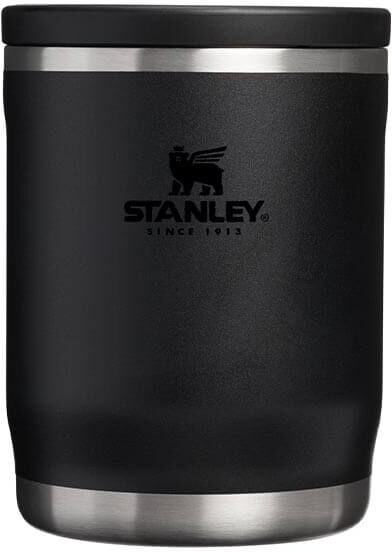
Stanley Adventure To-Go 0.35L Black Food JarThe Stanley Adventure ToGo 0.35L Black Food Jar is designed for those who enjoy meals on the move. Made from durable 18/8 stainless steel, this jar features double-wall vacuum insulation to keep your food hot or cold for up to 6 hours. Its wide opening allows for easy filling and cleaning, making it a practical choice for outdoor adventures or daily commutes. This food jar is BPA-free and leakproof, ensuring that your meals stay secure during travel. It's also dishwasher safe for effortless cleaning, making it suitable for everyday use. Dimensions: 10.7(H) x 10(W) x 10(D)cm Weight: 0.3kg.28,50 £*Shipping: 3,50 £Secure redirect to the provider
-
Stanley Adventure To-Go 0.53L Black Food JarThe Stanley Adventure ToGo 0.53L Black Food Jar is designed for those who enjoy meals on the move. Made from durable 18/8 stainless steel, this jar features double-wall vacuum insulation to keep your food hot or cold for up to 6 hours. Its wide opening allows for easy filling and cleaning, making it a practical choice for outdoor adventures or daily commutes. This food jar is BPA-free and leakproof, ensuring that your meals stay secure during travel. It's also dishwasher safe for effortless cleaning, making it suitable for everyday use. Dimensions: 13.5(H) x 10(W) x 10(D)cm Weight: 0.36kg.31,50 £*Shipping: 3,50 £Secure redirect to the provider
-
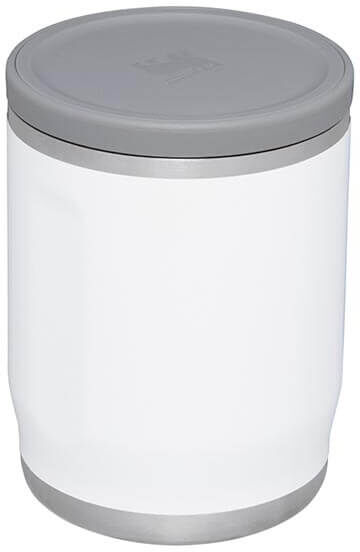
Stanley Adventure To-Go 0.53L Frost Food JarThe Stanley Adventure ToGo 0.53L Frost Food Jar is designed for those who enjoy meals on the move. Made from durable 18/8 stainless steel, this jar features double-wall vacuum insulation to keep your food hot or cold for up to 6 hours. Its wide opening allows for easy filling and cleaning, making it a practical choice for outdoor adventures or daily commutes. This food jar is BPA-free and leakproof, ensuring that your meals stay secure during travel. It's also dishwasher safe for effortless cleaning, making it suitable for everyday use. Dimensions: 13.5(H) x 10(W) x 10(D)cm Weight: 0.36kg.31,50 £*Shipping: 3,50 £Secure redirect to the provider


-
What are the two oldest groups of vertebrates that evolved from the early vertebrates?
The two oldest groups of vertebrates that evolved from early vertebrates are the jawless fish, such as lampreys and hagfish, and the cartilaginous fish, including sharks, rays, and skates. These groups are considered some of the most ancient vertebrates and have been around for hundreds of millions of years. Jawless fish are characterized by their lack of true jaws, while cartilaginous fish have skeletons made of cartilage instead of bone. **
-
What is a question about vertebrates?
One question about vertebrates could be: How do the skeletal structures of vertebrates, such as humans, fish, and birds, differ in terms of adaptations for movement and support? **
-
What is the evolution of vertebrates?
The evolution of vertebrates is a complex process that spans hundreds of millions of years. It is believed that vertebrates evolved from a group of ancient invertebrate chordates, with the first vertebrates appearing around 500 million years ago. Over time, vertebrates diversified and evolved into a wide range of species, including fish, amphibians, reptiles, birds, and mammals. This evolution was marked by key innovations such as the development of jaws, limbs, and the ability to live on land. Today, vertebrates are the most diverse group of animals on Earth, with over 65,000 species. **
-
How did the evolution of vertebrates unfold?
The evolution of vertebrates unfolded over millions of years through a series of key events. It is believed that vertebrates evolved from early chordates, which were simple, fish-like organisms with a notochord. Over time, vertebrates developed more complex features such as jaws, limbs, and a bony skeleton. This allowed them to adapt to various environments and eventually gave rise to the diverse array of vertebrates we see today, including fish, amphibians, reptiles, birds, and mammals. **

Are there vertebrates that do not sleep?
Yes, there are some vertebrates that do not sleep in the traditional sense. For example, certain species of fish, such as some types of sharks, do not have a sleep-wake cycle like mammals and birds. Instead, they have periods of rest where they may reduce their activity but do not enter a true sleep state. Additionally, some species of birds, like the frigatebird, are known to be able to sleep while flying, allowing them to rest without fully shutting down their brains like other animals do during sleep. **
Which are the oldest groups of vertebrates?
The oldest groups of vertebrates are jawless fish, which include hagfish and lampreys. These ancient fish have been around for hundreds of millions of years and are considered some of the most primitive vertebrates. They lack true jaws and have a cartilaginous skeleton, distinguishing them from more advanced vertebrates like bony fish, amphibians, reptiles, birds, and mammals. Despite their simple anatomy, jawless fish have managed to survive and adapt to various environments over time. **
Top-Angebote
Products related to Vertebrates Endoskeleton:
-
From the Archives: Black History and Culture Value PackThis brand-new series is rooted in a profound commitment to shedding light on some of the important -- and often lesser-known -- aspects of Black history. From the Archives features landmarks, events, people, and artistic endeavors that have played...26,99 $*Shipping: 0,00 $Secure redirect to the provider
-
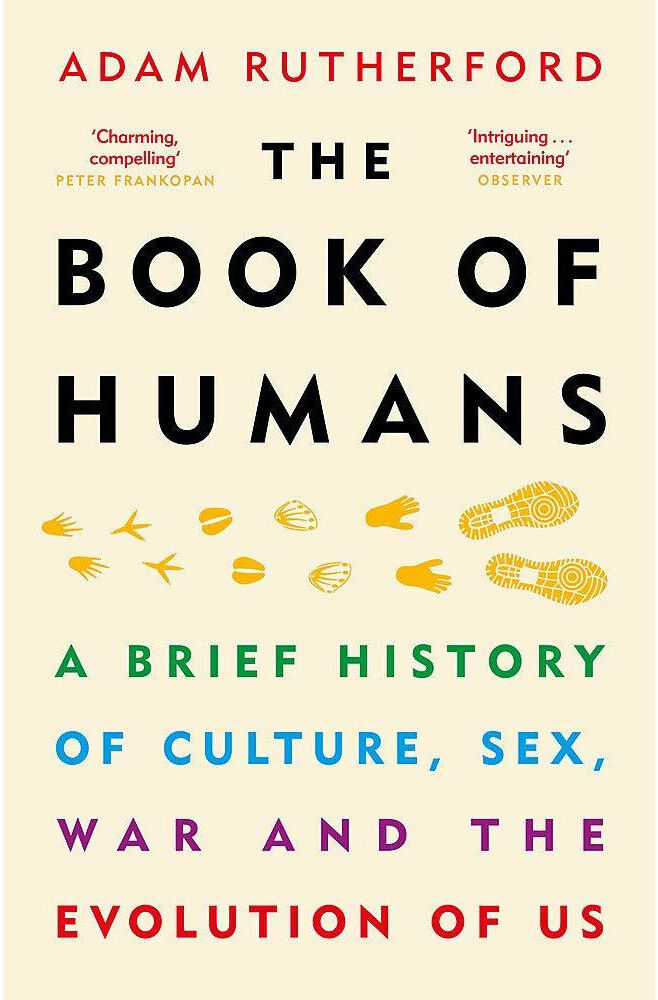
Orion The Book of Humans by Adam Rutherford – A Brief History of Culture, Sex, War & EvolutionWHAT MAKES US HUMAN? Waging war? Sex for pleasure? Creating art? Mastery of fire? In this thrilling tour of the animal kingdom, Adam Rutherford tells the story of how we became the unique creatures we are today. Illuminated by the latest scientific discoveries, THE BOOK OF HUMANS is a dazzling compendium of what unequivocally fixes us as animals, and reveals how we are extraordinary among them.4,98 £*Shipping: 1,99 £Secure redirect to the provider
-
Stanley Adventure To-Go 0.35L Black Food JarThe Stanley Adventure ToGo 0.35L Black Food Jar is designed for those who enjoy meals on the move. Made from durable 18/8 stainless steel, this jar features double-wall vacuum insulation to keep your food hot or cold for up to 6 hours. Its wide opening allows for easy filling and cleaning, making it a practical choice for outdoor adventures or daily commutes. This food jar is BPA-free and leakproof, ensuring that your meals stay secure during travel. It's also dishwasher safe for effortless cleaning, making it suitable for everyday use. Dimensions: 10.7(H) x 10(W) x 10(D)cm Weight: 0.3kg.28,50 £*Shipping: 3,50 £Secure redirect to the provider
-
How have vertebrates evolved?
Vertebrates have evolved over millions of years through a process of natural selection and genetic mutations. They have adapted to various environments by developing specialized traits such as limbs for land movement, wings for flight, and fins for swimming. Vertebrates have also diversified into different species with unique characteristics to better survive and thrive in their respective habitats. Overall, the evolution of vertebrates has been a complex and dynamic process that has led to the incredible diversity of species we see today. **
-
What are classes of vertebrates?
Vertebrates are animals with a backbone or spinal column. There are five main classes of vertebrates: mammals, birds, reptiles, amphibians, and fish. Each class has unique characteristics and adaptations that help them thrive in their respective environments. These classes are further divided into different orders, families, and species based on specific traits and evolutionary history. **
-
What are the two oldest groups of vertebrates that evolved from the early vertebrates?
The two oldest groups of vertebrates that evolved from early vertebrates are the jawless fish, such as lampreys and hagfish, and the cartilaginous fish, including sharks, rays, and skates. These groups are considered some of the most ancient vertebrates and have been around for hundreds of millions of years. Jawless fish are characterized by their lack of true jaws, while cartilaginous fish have skeletons made of cartilage instead of bone. **
-
What is a question about vertebrates?
One question about vertebrates could be: How do the skeletal structures of vertebrates, such as humans, fish, and birds, differ in terms of adaptations for movement and support? **
Similar search terms for Vertebrates Endoskeleton
-
Stanley Adventure To-Go 0.53L Black Food JarThe Stanley Adventure ToGo 0.53L Black Food Jar is designed for those who enjoy meals on the move. Made from durable 18/8 stainless steel, this jar features double-wall vacuum insulation to keep your food hot or cold for up to 6 hours. Its wide opening allows for easy filling and cleaning, making it a practical choice for outdoor adventures or daily commutes. This food jar is BPA-free and leakproof, ensuring that your meals stay secure during travel. It's also dishwasher safe for effortless cleaning, making it suitable for everyday use. Dimensions: 13.5(H) x 10(W) x 10(D)cm Weight: 0.36kg.31,50 £*Shipping: 3,50 £Secure redirect to the provider
-
Stanley Adventure To-Go 0.53L Frost Food JarThe Stanley Adventure ToGo 0.53L Frost Food Jar is designed for those who enjoy meals on the move. Made from durable 18/8 stainless steel, this jar features double-wall vacuum insulation to keep your food hot or cold for up to 6 hours. Its wide opening allows for easy filling and cleaning, making it a practical choice for outdoor adventures or daily commutes. This food jar is BPA-free and leakproof, ensuring that your meals stay secure during travel. It's also dishwasher safe for effortless cleaning, making it suitable for everyday use. Dimensions: 13.5(H) x 10(W) x 10(D)cm Weight: 0.36kg.31,50 £*Shipping: 3,50 £Secure redirect to the provider
-
Stanley Adventure To-Go 0.35L Frost Food JarThe Stanley Adventure ToGo 0.35L Frost Food Jar is designed for those who enjoy meals on the move. Made from durable 18/8 stainless steel, this jar features double-wall vacuum insulation to keep your food hot or cold for up to 6 hours. Its wide opening allows for easy filling and cleaning, making it a practical choice for outdoor adventures or daily commutes. This food jar is BPA-free and leakproof, ensuring that your meals stay secure during travel. It's also dishwasher safe for effortless cleaning, making it suitable for everyday use. Dimensions: 10.7(H) x 10(W) x 10(D)cm Weight: 0.3kg.28,50 £*Shipping: 3,50 £Secure redirect to the provider
-
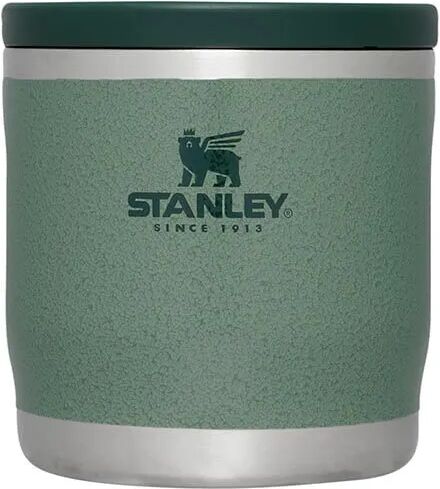
Stanley Adventure To-Go 0.35L Hammertone Green Food JarThe Stanley Adventure ToGo 0.35L Hammertone Green Food Jar is designed for those who enjoy meals on the move. Made from durable 18/8 stainless steel, this jar features double-wall vacuum insulation to keep your food hot or cold for up to 6 hours. Its wide opening allows for easy filling and cleaning, making it a practical choice for outdoor adventures or daily commutes. This food jar is BPA-free and leakproof, ensuring that your meals stay secure during travel. It's also dishwasher safe for effortless cleaning, making it suitable for everyday use. Dimensions: 10.7(H) x 10(W) x 10(D)cm Weight: 0.3kg.28,50 £*Shipping: 3,50 £Secure redirect to the provider
-
What is the evolution of vertebrates?
The evolution of vertebrates is a complex process that spans hundreds of millions of years. It is believed that vertebrates evolved from a group of ancient invertebrate chordates, with the first vertebrates appearing around 500 million years ago. Over time, vertebrates diversified and evolved into a wide range of species, including fish, amphibians, reptiles, birds, and mammals. This evolution was marked by key innovations such as the development of jaws, limbs, and the ability to live on land. Today, vertebrates are the most diverse group of animals on Earth, with over 65,000 species. **
-
How did the evolution of vertebrates unfold?
The evolution of vertebrates unfolded over millions of years through a series of key events. It is believed that vertebrates evolved from early chordates, which were simple, fish-like organisms with a notochord. Over time, vertebrates developed more complex features such as jaws, limbs, and a bony skeleton. This allowed them to adapt to various environments and eventually gave rise to the diverse array of vertebrates we see today, including fish, amphibians, reptiles, birds, and mammals. **
-
Are there vertebrates that do not sleep?
Yes, there are some vertebrates that do not sleep in the traditional sense. For example, certain species of fish, such as some types of sharks, do not have a sleep-wake cycle like mammals and birds. Instead, they have periods of rest where they may reduce their activity but do not enter a true sleep state. Additionally, some species of birds, like the frigatebird, are known to be able to sleep while flying, allowing them to rest without fully shutting down their brains like other animals do during sleep. **
-
Which are the oldest groups of vertebrates?
The oldest groups of vertebrates are jawless fish, which include hagfish and lampreys. These ancient fish have been around for hundreds of millions of years and are considered some of the most primitive vertebrates. They lack true jaws and have a cartilaginous skeleton, distinguishing them from more advanced vertebrates like bony fish, amphibians, reptiles, birds, and mammals. Despite their simple anatomy, jawless fish have managed to survive and adapt to various environments over time. **
* All prices are inclusive of VAT and, if applicable, plus shipping costs. The offer information is based on the details provided by the respective shop and is updated through automated processes. Real-time updates do not occur, so deviations can occur in individual cases. ** Note: Parts of this content were created by AI.